|
General
If you are planning to try growing Disas, it is probably easiest to start with mature plants. Five evergreen species (D uniflora, D racemosa, D tripetaloides, D aurata and D cardinalis) are most often cultivated and hybridized. These Disas are all found in habitats that are wet for all or at least part of the year. D. racemosa might do best being kept dry in the summer (that is what happens to it in nature), and D. cardinalis isn't all that easy to grow. Many other Disas are deciduous, are not associated with water or wet areas, and have entirely different cultural requirements. Please don't use my cultural suggestions if you try to grow these other Disa types! The "Disa culture" summary alongside should be helpful. If you can't supply good quality water (low dissolved solids or TDS) don't even try Disas. You will probably find it necessary to spray your plants with fungicide and insecticide. Since Disas need to be constantly moist, most of my plants get watered automatically under control of a timer and pump. There are a couple of excellent books specifically on Disas that include plenty of detail on their cultivation:
Mature plants Flasks Seed |
Disa culture
Water quality: critical; low TDS; no “hard water” Temperature: 0°C/32°F to 25°C/75°F Air: 50-75% humidity, good air movement Light: bright, use about 50% shading in summer Growing media: see below Fertilizer: complete, water soluble, very weak Watering: medium must never dry out! hydroculture Repotting: every year, usually in Fall Fungicides: may be necessary, unfortunately Insect pests: aphids, thrips, fungus gnats Media
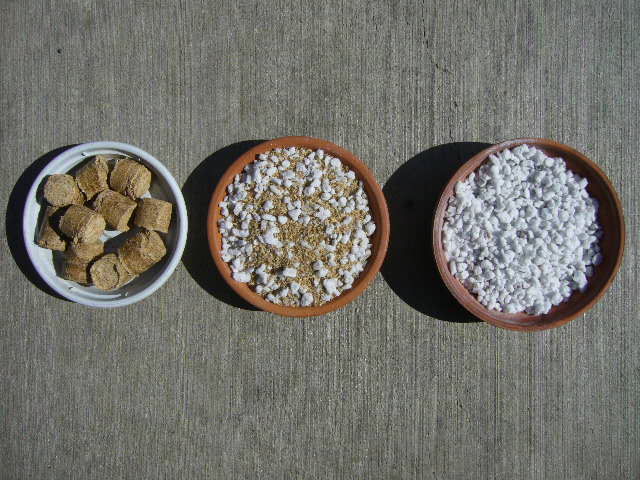
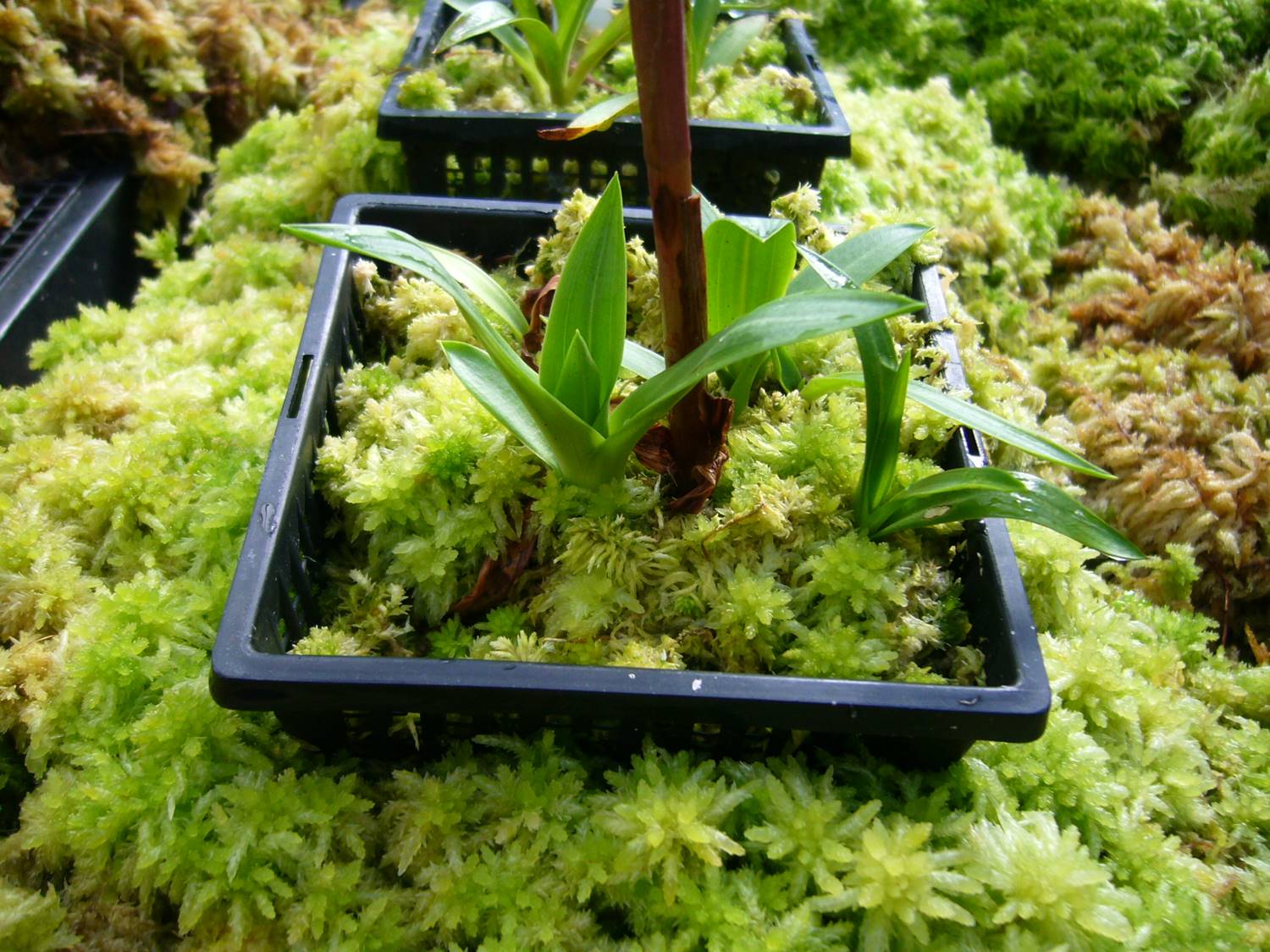
General requirements: Constantly moist but never waterlogged Excellent drainage and aeration Mildly acidic Some specific solutions: Coarse quartz sand/grit (popular in South Africa) Supersphag:Perlite, 1:1 or 1:2 Sphagnum moss – alive or dead Peat:Perlite, 3:2 (Parkinson Orchids, UK) Composted pine bark, screened (fines) Coconut husk chips with peat and/or Perlite |